After Scott Stringer had a private meeting with Mike Bloomberg, Mr. Stringer dropped out of the mayor's race, to clear the way for Christine Quinn's own mayoral race. Now, in an apparent reward, Mr. Stringer faces no opposition in his newly downsized mayoral campaign for controller. Hmmmmmmmmmm.
Manhattan Borough President Scott Stringer is expected to announce as early as next week that he will not run for New York City mayor in 2013, but instead campaign for comptroller, according to The New York Times.
When Mayor Michael Bloomberg gets all up in the faces of Manhattan Borough President Scott Stringer and former Controller Bill Thompson, does Mayor Bloomberg intentionally damage the contractual or other business relationships of these mayoral candidates, their campaign workers, their paid consultants, their supporters, and other political or business relationships or activities ? Is there such an act as tortious interference with democracy ? What does New York City Council Speaker Christine Quinn think about the appearances of Mayor Bloomberg interfering with democratic elections ?
The Board of NYCHA sits on perhaps $1 billion dollars, while tenants live in moldy, rodent-infested flop houses. Let them eat cake !
Thanks to an investigative series by a Daily News team that exposed nearly $1 billion in funds going unused while tenants lived plagued by mold, rats and more, NYCHA is slated to undergo serious reforms. (DailyNews DailyPolitics)
Too bad there are no housing activists, amongst the mayoral candidates, other than Manhattan Borough President Scott Stringer.
“We commend City Council Committee Chairperson Rosie Mendez for convening today’s hearing on the lack of security cameras at NYCHA housing developments, which is only the tip of the iceberg when it comes to the agency’s failures. Today’s hearing should be the first of many to get an understanding of why NYCHA’s buildings are deteriorating and its housing developments are overrun by rodents, all while NYCHA sits on a pile of unspent money. We have serious questions about NYCHA’s operations [which] demand comprehensive answers,” said Controller John Liu.
Under pressure to overhaul the New York City Housing Authority, Mayor Michael R. Bloomberg has decided to remove two highly paid appointees from the agency’s board and replace them with volunteers, including one who lives in public housing, city officials said on Thursday. (NYTimes)
Borough President Stringer has claimed victory over Thursday's announcement that two board members of the New York City Housing Authority would step down after a scandal broke over the flop houses that NYCHA operated (Politicker).
If nothing else, the buzz showed that Mr. Weiner was still capable of generating chatter in a mayoral field that seems to be solidifying despite its lack of star power.
With his war chest, Mr. Weiner would have an edge over several of the likely Democratic candidates. William C. Thompson Jr., for instance, a former comptroller and a declared mayoral candidate, has raised only $1.5 million for the race so far, according to a statement by his campaign on Sunday.
Still, Mr. Weiner faces substantial obstacles, including that several of his former aides have now signed onto other mayoral campaigns. His former pollster, Joel Benenson, is now working for the City Council speaker, Christine C. Quinn, while two former political consultants, Jim Margolis and Anson Kaye, are working for the Manhattan borough president, Scott M. Stringer.
Already, Mr. Weiner seems to be finding encouragement from folks, who believe that if people can look beyond the fact that Christine Quinn was sued for back rent four times, then we can look beyond Mr. Weiner's Twitter controversy.
'' Manhattan Borough President Scott Stringer’s mayoral campaign office at 40 Worth St. was burglarized over the June 23-24 weekend and two laptop computers were stolen. Campaign workers are trying to determine whether the computers, which were not used personally by Stringer, had any politically sensitive documents. ''
ABC News reports that, ''Investigators are working to determine whether the theft was politically motivated and what information was on the computers.''
Bill Rudin and the Rudin Family stand to make hundreds of millions of dollars from the Luxury Condo Conversion of St. Vincent's Hospital, so much so, that spending $500,000 in lobbying alone is no big whoop.
Rudin Management Company, Inc., has declared $576,921 in lobbying expenses to New York City under the "Pay-to-Play" campaign finance reform regulations.
Over the course of the last 4 years, Rudin Management has paid at least $371,246 in declared lobbying expenses to the real estate lawyers and other lobbyists at the law firm of Fried, Frank, Harris, Shriver & Jacobson LLP. The Fried Frank real estate lobbyist that was most visible during the Community Board 2 hearings was Melanie Meyers. (Fried Frank is the old law firm, where Sarge Shriver once worked as a name partner ; Fried Frank is now disparaging Mr. Shriver's activist commitment to healthcare under President Lyndon B. Johnson's "War on Poverty.")
Another $205,675 was paid by Rudin Management to the James F. Capalino & Associaties, Inc., lobbying firm. Interestingly, over 75% of the staggering amount paid to Capalino & Associates was for lobbying that targeted Manhattan Borough President Scott Stringer. On November 25, 2011, President Stringer issued a recommendation in favour of the Rudin Luxury Condo Conversion of St. Vincent's Hospital.
A .pdf report of the Rudin Management Company, Inc., lobbying expenses is available on Scribd :
Manhattan Borough President Scott Stringer Blasts Mayor's Race Opponent Chris Quinn
Manhattan Borough President Scott Stringer took an apparent swipe at his mayor's race opponent, calling for an end to pork spending by local lawmakers.
"We have a system where some districts get a lot more than others and politics is the only reason," Stringer told reporters yesterday.
Quinn is an early frontrunner in the mayoral election with the largest war chest of more than $4 million. Yet one of her major challenges in her expected run is the so-called slush fund scandal that erupted in 2007.
-- Excerpted from the Daily Politics blog by Celeste Katz on The New York Daily News.
By DAVID SEIFMAN City Hall Bureau Chief
Last Updated: 7:52 AM, April 2, 2011
Posted: 12:53 AM, April 2, 2011
Just about any of the candidates hoping to succeed Mayor Bloomberg in 2013 has a shot at the job -- except Eliot Spitzer.
A NY1/Marist College poll reported yesterday that the six most-mentioned contenders are tightly bunched as of now, with Rep. Anthony Weiner slightly ahead at 18 percent and Manhattan Borough President Scott Stringer bringing up the rear at 4 percent.
In between are former Comptroller Bill Thompson, 15 percent; City Council Speaker Christine Quinn and Comptroller John Liu, both at 13 percent; and Public Advocate Bill de Blasio, 9 percent. Most voters -- 27 percent -- are undecided.
"I think [the numbers] mean very little. At this state, it's primarily name recognition," said veteran consultant Jerry Skurnik. "Candidates who haven't even been listed in the polls have been elected two years later."
Spitzer, who left the governor's job after admitting liasons with hookers, remains a long shot for elective office.
Sixty-two percent of voters said they'd prefer he not run for mayor, compared to 29 percent who suggested he go for it.
The poll of 772 adults in the city was conducted March 22-24. It has a margin of error of 4 percentage points.
When you ask New York City Council Speaker Christine Quinn a question, she likes to give you a non-answer.
She likes to be evasive, but she is definitive about giving you the run-around. She doesn’t have to give you either a proverbial bait-and-switch or back-pedal, provided she never has to first give you any policy position with which to lure you.
When City Hall bureau reporter Erin Einhorm from The New York Daily News asked Speaker Quinn what she thought about a bill that « would require mayors to disclose when they leave town and to designate a proxy, » Speaker Quinn said, « I haven’t seen the bill, yet. »
Councilman Peter Vallone, Jr., planned to introduce the whereabouts bill, The Daily News reported. Here is how Speaker Quinn expaneded on her non-answer :
« The councilmember has put in a request for the legislation to be drafted. I know that the staff is working on it. I’ve spoken with the staff. I've asked them to send me an initial read they can get me on whether it’s within the powers that we have as a council. I've not gotten that back and of course haven't seen the draft and as soon as I get that information and [have] seen the draft, I’ll be able to take a position. »
What is more, before Speaker Quinn was for extending term limits, she didn’t want you to ask her about it. « The mayor knows my phone number, » Speaker Quinn said in early September 2008, after she was pressed about Mayor Bloomberg’s plans to extend term limits. « He knows where my office is, » Speaker Quinn added. « He knows where I live. If he has a piece of legislation he's interested in, he'll call me and we'll talk about it. Up until then, there's really nothing for me to say about term limits. »
If democracies are supposed to work efficiently only if voters know well each of the issues and the politicians who run for and hold office, then our experience with this pattern of deliberately evasive non-answers isn’t going to lead us to the path where voters know where we stand vis-à-vis Speaker Quinn. But that’s her real intention. She doesn’t want us to know where we stand. If we are like a « deaf speactator in the back row, » as Walter Lippmann has described disenfranchised voters, then that makes it easier for politicians like Speaker Quinn to avoid the messy work of having to live up to an ethic.
But to Speaker Quinn, who is climbing up the political ladder with her wagon hitched to Mayor Bloomberg’s coattails, taking on the powers that be is not likely going to happen. Taking a public policy position means you have to have something to fight for, and you have to be somebody, who fights for that in which you believe.
Using the spree of hospital closings in New York City, including that of St. Vincent’s Hospital, as a litmus test for Christine Quinn’s ethics.
At an emergency community meeting in the West Village on January 28, 2010, just weeks before St. Vincent’s Hospital was to close, Speaker Quinn gave what should have been, by all accounts, a touching and inspiring speech. She endorsed the idea that fighting for the hospital’s survival was critical to New York City.
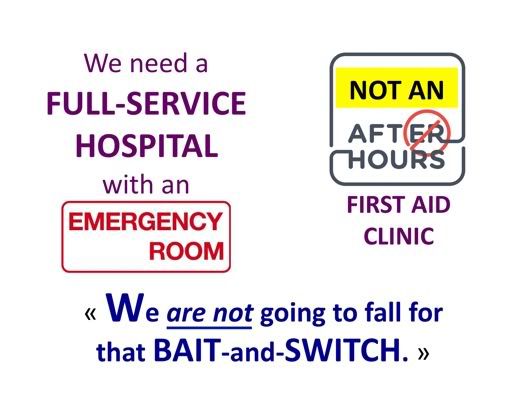
« I fail to accept that in all of New York, » she began, « there is no other healthcare institution that wants to merge with the great St. Vincent’s. I simply do not believe it. The State Department of Health wants us to believe it, because they have created an equation where that is the only answer that we would get. We are not going to fall for that bait-and-switch. We’re not going to fall for this trick that Continuum is the only entity out there. We’re going to say tonight, and we’re going to say it over and over again : the only plan that should be considered or ever approved by the state is one that keeps our hospital and our emergency room. »
There are times, like in the preceeding Save St. Vincent’s video, when Speaker Quinn can tap into the truth that the common New Yorker senses : that our economy and our social safety nets are a giant rug that is being pulled out from under us, and that, inspite of the horror, she sells herself as courageous enough and willing enough to fight for a progressive agenda. But in the year since Speaker Quinn spoke with such leadership at the emergency community meeting at Our Lady of Pompeii Church in Greenwich Village, we need to make an assessment of where we now find her in the fight to restore a hospital to the Lower West Side of Manhattan.
Should St. Vincent’s properties be sold and a new hospital never to be opened at its former site, lots of real estate companies stand to make a lot of money. A quick glance through the Councilpedia records published by the Citizens Union Foundation shows that many real estate companies have made substantial campaign donations to Speaker Quinn’s presumed 2013 mayoral campaign. Here is a quick sample :
What Speaker Quinn is gambling, the deal that she is making with the Devil, is that nobody is going to call her on her inability to make good on simple policy decisions, like « We are not going to fall for that bait-and-switch. » She is also counting on nobody getting outraged enough to say that the influence of real estate developers, as indicated by their large campaign contributions to Speaker Quinn's campaign treasury, is over-riding the needs the voting public. But with social media tools, such as Councilpedia, the old political boss ways of days gone by are numbered. What is more, in the political vacuum of Speaker Quinn’s definitive non-answers, she is creating opportunities for other politicians, to swoop in and offer voters a new sense of hope.
When he was a councilmember, John Liu found the courage to give press conferences about the performance of, dissatisfaction with, and budget crisis overseen by Speaker Quinn.
Now that he is City Controller, Mr. Liu has found the courage to challenge Mayor Bloomberg to immediately review suspicious technology contract scandals, such as with the Emergency Communications Transformation Program (ECTP). In a letter written to Mayor Bloomberg by Comptroller Liu, the Comptroller's office rejected a $286 million contract request that would have nearly doubled the initial ECTP contract cost of $380 million. The new contract request would have raised the ECTP budget to $666 million. (Click on the link to read the news release issued today by the Comptroller's office about the latest New York City technology contract scandal.)
In the face of Speaker Quinn’s passivity, other leaders are stepping forward to demonstrate dynamism, charisma, and decisive leadership.
The Definitive Answer to End the Cycle of Cynicism is Alive and Well In a Surprising Group of Activists and Leaders, among them Mr. Liu, Manhattan Borough President Scott Stringer, and the civil rights lawyer, Yetta Kurland.
If Mr. Liu continues to investigate questionable technology contracts, he is sure to win the praise of voters, who are tired of seeing tax money disappearing into blackholes of politically-awarded governemnt contracts, while, at the same time, the mayor runs his scorched earth campaign of school and firehouse closings with the tortured logic of the need to make budget cuts.
Shockingly, in the time that Speaker Quinn has presided over the New York City Council, at least eight city hospitals have closed. In 2010, North General Hospital in Harlem declared bankruptcy and St. Vincent's Hospital in the West Village shut down after shady backroom meetings. In 2009, two hospitals in Queens – St. John's Queens Hospital in Elmhurst and Mary Immaculate Hospital in Jamaica – went bankrupt. In 2008, Cabrini Medical Center in Manhattan, Parkway Hospital in Queens, and Victory Memorial Hospital in Bay Ridge closed. And in 2007, St. Vincent's Midtown in Manhattan was closed. Separately, one other hospital in Brooklyn, Long Island College Hospital, was recently saved : it had been on the brink of closing, and the only way the hospital was saved was by merging it with SUNY Downstate.
To some degree or another, each of the communities impacted by these hospital closings have objected, protested, or tried to litigate the decisions that lead to a hospital being closed in their community. But in no instance has a grass-roots community organisation powerfully come together as has happened following the closing of St. Vincent’s Hospital in Greenwich Village. There, a group called the Coälition For A New Village Hospital has been agitating, protesting, holding emergency community meetings, packing into Manhattan Community Board meetings, and litigating their cause to, first save St. Vincent’s Hospital, then, after the hospital closed, to restore a new hospital to the former site of St. Vincent’s. The group has shocked the normal course of cynical city politics, because, as we approach the one year anniversary of the closing of St. Vincent’s, this community group refuses to go away quietly. When the community heard « We are not going to fall for that bait-and-switch, » they believed it. Now, they’ve organised to make good on restoring a hospital to the Lower West Side of Manhattan. Recently, four community activists were even arrested after orchestrating a restro sit-in at the former main building of St. Vincent’s in a courageous act of civil disobedience ; the four activists spent one night in jail before they got processed out of the court system. The closing of St. Vincent's has even inspired the creation of a non-violent civil disobedience movement. The sense in the community is one of dire seriousness.
St. Vincent’s was more than a hospital, it was also a Level 1 trauma center, which, for Lower Manhattan, had served as a critical underpinning for New York City’s emergency preparedness in this post-9/11 world. Some see a parallel between the need to be ready for another terrorist attack in Lower Manhattan and the fight to keep essential municipal services and basic infrastructure. And given that Speaker Quinn takes so many campaign contributions from the real estate industry, some community activists are sensing that the fight for a new hospital transcends a mere fight to preserve basic infrastructure, but it also taps into the historical tradition in Greenwich Village to fight urban renewal imposed by political figures, who force through neighborhood-destroying mega-development projects.
In the face of over-development, there is a chance that New York City communities will link up in a city-wide grass-root effort to block urban renewal projects that would destroy the character of our neighborhoods.
In August 2010, Speaker Quinn advocated and won approval from the City Council for a 67-floor skyscraper just two blocks away from the Empire State Building. The new building is to be built in Speaker Quinn’s district. When The Gotham Gazette reported about the skyscraper’s approval, the newspaper quoted the City Council Speaker thusly : « We want new Rockefeller Centers. … New York City is about growth -- about growing bigger and higher all the time. » Whereas, all New Yorkers take pride in living in a vibrant city, we think that all the zone-busting development projects are just a revival of Robert Moses’ twisted idea that New York City should be one giant crosstown expressway, only this time the city planning idea being pushed is more skyscrapers and more and more glass and steel luxury condominiums.
And as in that time then, when Mr. Moses’s overdevelopment plans shocked the conscious of New Yorkers, unintentionally launching the careers of a whole wave of civic activists lead by Jane Jacobs, now in this time here, we have the creation of similar conditions under which Speaker Quinn’s development plans are triggering a new wave of civic activists, who are pushing back, who are saying, « Enough is enough ! » Whereas the popular perception then was that Mr. Moses was motivated by a power trip that made him feel like he needed to be in control over all major development projects in such a mania that bordered on demolishing as much of old New York as he could, we don’t know if Speaker Quinn is motivated by the same ambition. But we do know that she is in a race to raise substantial amounts of money to mount an expensive political campaign to become mayor of New York City in the elections of 2013.
The Coälition For A New Village Hospital is based squarely within Speaker Quinn’s City Council district. The Coälition has been networking with various city and state politicians, to find a champion on the inside, who could launch an investigation into the finances and the mysterious closed-door meetings that lead to the closing of St. Vincent’s. The Coälition has also been working to feverishly prevent any change in zoning for the main buildings that served as home to St. Vincent’s, to preserve the existing infrastructure for any new hospital that would be interested in replacing St. Vincent’s. Remember that in about the course of one year, we heard Speaker Quinn change her tune from : « We are not going to fall for that bait-and-switch, » to : « As the sale of St. Vincent’s properties makes its way through bankruptcy court. » The community sees the writing on the wall. And right now, there is no full-service hospital in the entire West Side of Manhattan from Columbus Circle all the way down to Battery Park. And with the loss of St. Vincent’s Level 1 trauma center, all of Lower Manhattan is at risk should another terrorist attack again happen below 14th Street. Even if Speaker Quinn really, deep-down, believed that the Lower West Side needed a hospital, nobody but her and her political campaign know for sure if she is really fighting for one, or if she is just going through the motions, a political bluff known as astroturfing.
In numerous conversations with the residents of the Lower West Side of Manhattan, many people are beginning to hedge their bets. Others are saying that we need all hands on deck. They are looking to City Controller John Liu to launch an investigation into St. Vincent’s finances, in any jurisdictional capacity at his disposal. Residents are also looking to several Manhattan Community Boards, to help preserve the zoning on the former campus of St. Vincent’s. And in the last few weeks, one new ally has showed up on their radar, Manhattan Borough President Scott Stringer. In his authority, President Stringer has broad zoning powers. According to the city’s website :
« The Borough President reviews all public and private land-use projects in Manhattan and can recommend approval or rejection of those projects. With an appointment to the City Planning Commission, the Borough President can also play a proactive role in shaping the future of development in Manhattan. Also, the Borough President appoints most members of Manhattan's Community Boards and then provides support and oversight to those boards as they make crucial decisions affecting zoning and permits. »
Do the liberal and progressive politics of Manhattan Borough President Stringer include a real sensibility for the spirit of Jane Jacobs' ethics about responsible urban planning to prevent community decay ?
At a February 16, 2011, meeting sponsored by the Coälition, Presdient Stringer spoke about the need for a full-service hospital in the area. By publicly throwing his hat into the ring of the fight for a new hospital, Mr. Stringer may have found a way to transform his political career. None of the often-touted, presumed 2013 mayoral candidates have yet to inspire a groundswell of grass-roots organisers to identify a clear early leader among the crowded field of Democratic candidates. As President Stringer prepares to launch his own mayoral bid, he could count on the support of a few hundred thousand New Yorkers, who live in the former St. Vincent's catchment area. He could also reasonably expect to count on the support of the teams of community organisers that are being developed by their participation in the Coälition. If President Stringer did find a way to enforceably preserve the zoning of the former St. Vincent’ campus, he would zone-block the biggest fear running through the community and the Coälition : the sale of St. Vincent’s properties currently making its way through bankruptcy court. The area that would most benefit from an enforceable zone-block would be a critical area of voters in Manhattan, which also happens to coïncide with what would be considered Speaker Quinn's strongest base of support, as she organises herself to run for mayor of New York in 2013. Not only would President Stringer win over a valuable new grass-roots organisation in Manhattan, but he would be undercutting Speaker Quinn’s base of support right in her very own City Council District. (One way for President Stringer to measure the likelihood that hospital closings will become a major mayoral campaign issue is if new threats arise that would affect hospital finances, or if neighborhoods outside of Manhattan begin to organise around this issue.)
President Stringer is an accomplished politician. His entry into politics was initially shaped by having served as a legislative assistant to Congressman Jerrold Nadler, back when the Congressman was an Assemblyman. Before he was elected to preside over the Borough of Manhattan, President Stringer served as an Assemblyman himself, representing the very seat once occupied by Congressman Nadler. A true Democrat, President Stringer has the support of progressive Democratic political clubs in New York City, among them the Jim Owles Liberal Democratic Club, named for the legendary gay activist Jim Owles. Like any elected politician, President Stinger has not been able to please all of his critics. But residents of the Lower West Side -- and beyond -- are turning to him for the opportunity that both see in each other : a way to legally preserve the zoning of the former St. Vincent’s buildings, as well as a way to elect a mayor, who could hear the calls from the community to reverse the spree of hospital closings and to put a stop to the irresponsible and systematic demolition of old New York. Already, the movement for a new Lower West Side hospital has attracted members or former members of major LGBT organizations such as ACT-UP and Queer Rising, among others, plus the contribution of activists outside of Manhattan. And the movement has also guaranteed the ascendancy of civil rights attorney Yetta Kurland as a respected community leader. Therefore, President Stringer is looking at the formation of an almost instant coälition of support for his mayoral candidacy, provided he delivered quickly on an enforceable zone-block to preserve the integrity of the St. Vincent’s properties, before the buildings are sold in bankruptcy court.
If President Stringer played by the normal cynical rules of New York City politics, he would be all talk and no action. But if he was ready for a game-changer, one that would transform him into an instant populist hero, he would call Speaker Quinn on what everybody sees as one of her two Achilles’ Heels : her St. Vincent’s astroturfing bluff. (Speaker Quinn's other Achilles' Heels are term limits and the slush fund scandal.) She says that she supports a new hospital, while, at the same time, she is taking tens of thousands of dollars in campaign contributions from the very real estate industry that stand to make tens of millions, and possibly hundreds of millions in profits, from the demolition of the St. Vincent’s properties and the development of more glass and steel high-rise luxury condominiums in the heart of community where Jane Jacobs used to call home. And Speaker Quinn’s gamble is that she can get away with giving definitive non-answers when everybody in her very City Council District is longing for decisive leadership to restore a hospital at the former site of St. Vincent's.
Meanwhile, in respect of the proposed budget cuts to the offices of the public advocate and borough presidents has outraged Scott Stringer, the Manhattan borough president.
Mr. Stringer told The Journal that under the twin administrations of Mayor Bloomberg and City Council Speaker Christine Quinn, the annual process for setting the budgets for the borough presidents and the public advocate has become the “most politicized” in a generation.
Moreover, that the mayor seems obsessed with laying off public school teachers has worried others whether the mayor is, indeed, making biased budget cuts.
"His complete insistence on teacher layoffs seems bizarre to us at this point. We think it's more of a political game and scaring people," Michael Mulgrew, president of the United Federation of Teachers, told NY1 television, according to Yahoo! News.
Parkway Hospital in Forest Hills was forced to close in November 2008 by the Berger Commission empaneled by, among others, then Gov. George Pataki (R).
Parkway Hospital was named on a 2006 list of New York hospitals that were told to close, but Parkway tried to legally fight the forced shut down in the courts.
According to Crain’s New York : “But that end-run around the state’s mandate failed last week when the state Department of Health let Parkway’s operating certificate expire on Oct. 30, bringing an abrupt end to the contentious battle. Last week, the judge overseeing Parkway’s court fight denied a motion to reargue a temporary restraining order on the closure, while an appellate court denied Parkway's request to appeal.”
The closing of Parkway Hospital left a lot of bitter feelings among the former employees. The experience that Parkway employees and patients had with the impact of the Berger Commission’s heavy-handed mandated closings created nothing but disruption, denial of healthcare, and the loss of jobs. (Read the comments on this Queens Crap post (and this recent one, too) – Queens Crap acts as a historical archive of all of the hospital closing in Queens.)
At the time of its closing, approximately 600 hospital workers lost their jobs. An unknown number of other jobs, which depended on the hospital, were also eliminated as a result of the hospital closing. (Click here for more information about : the Berger Commission Report.)
As more and more hospitals close in New York City, residents are finding themselves at greater risk of having fewer ER’s and trauma centers available to them in the event of health care emergencies. After other hospital closings, residents have complained that the New York State Department of Health lacked a plan for providing emergency healthcare for their respective affected communities. In technical terms, the area served by a hospital is called a catchment area.
Hospital Closure Planning Act
In September 2010, New York City leaders urged Gov. David Paterson to sign the Hospital Closure Planning Act, a bill which would have required the state’s Department of Health to hold a public forum and report on the impact of a hospital's closure on the surrounding community's access to medical care. The legislation, which was sponsored by Assemblyman Rory Lancman (D-Fresh Meadows) and Senator Shirley L. Huntley (D-Jamaica), came in response to the notorious closings of Mary Immaculate, St. John's, and Parkway hospitals in Queens, and St. Vincent's Hospital in Manhattan. After these four hospitals closed, each community was outraged and complained that the state lacked a plan for providing adequate and safe replacements of emergency healthcare for the catchment areas.
“A hospital's closing should not mean the closing off of healthcare services for the surrounding community, but that's what happens unless the state listens to the community and makes plans for meeting its healthcare needs," said Assemblyman Lancman.
“Losing a hospital can adversely affect a community and its residents. We’ve seen it happen here in Southeast Queens and most recently in Manhattan, with the closing of St. Vincent’s hospital. Due to current economic climate New York State is facing we must ensure that neighborhoods across the state can access alternative health care when a hospital closes. It is equally important to involve communities in the planned closure of a hospital and in replacing the most important services residents rely on. The residents of the community where a hospital is located have the best understanding of the services they need and what needs to be done,” said Senator Huntley. In October 2010, Gov. Patterson signed the Hospital Closure Planning Act into law after he had vetoed a similar bill in 2009.
Hospital Closings As A 2013 Mayoral Campaign Issue ?
Manhattan Borough President Scott Stringer is widely seen to be running for mayor of New York City in the 2013 election, and residents in the Lower West Side are hoping that hospital closings will become a campaign issue. At a community forum in Chelsea on Feb. 16, Mr. Stringer delivered a maverick speech, in which he committed to helping the Lower West Side of Manhattan fight for a full-service hospital to replace St. Vincent’s. He was the only major city politician to attend the forum. The city council member most residents are turning to for help in restoring a full-service hospital in the Lower West Side is Speaker Christine Quinn, but she has a predictably poor track record in fighting for working class New Yorkers (She refuses to support paid sick leave.), much less to save New York City hospitals from closing.
In the time that Ms. Quinn has been Speaker of the New York City Council, at least eight city hospitals have closed. In 2010, North General Hospital in Harlem declared bankruptcy and St. Vincent's Hospital in the West Village shut down after shady backroom meetings. In 2009, two hospitals in Queens – St. John's Queens Hospital in Elmhurst and Mary Immaculate Hospital in Jamaica – went bankrupt. In 2008, Cabrini Medical Center in Manhattan and Victory Memorial Hospital in Bay Ridge closed. And in 2007, St. Vincent's Midtown in Manhattan was closed. Separately, one other hospital in Brooklyn, Long Island College Hospital, was recently saved : it had been on the brink of closing, and the only way the hospital was saved was by merging it with SUNY Downstate.
The toll of all of these hospital closings is now being felt across the state, not just in New York City.
Community Imact of All These Hospital Closings ; Didn’t Anybody Predict ER Wait Times Would Rise As A Consequence ?
Industry sources said recent hospital closures have contributed to longer wait times. For example, St. Vincent's Medical Center and North General hospital in Manhattan shut down last year, and about a half-dozen city hospitals have shut down over the last several years.
Last October, New York magazine published an exposé written by Mark Levine, which described the dangerous public health issues resulting from all the hospital closings. “Last year, a pair of hospitals in Queens closed suddenly, just before the outbreak of H1N1, causing overflow conditions in the emergency rooms of nearby facilities, one of which set up a triage area on a loading dock," Mr. Levine wrote.
What is more, in January, The New York Post has made a list of a total of nine hospitals, which would be in danger of closing, if New York State government makes major cuts in Medicaid funding. In Brooklyn, five hospitals were identified as being in danger of closing : Brooklyn Center, Brookdale, Interfaith, Kingsbrook, and Wyckoff. In Queens, two more hospitals were named to be at a high risk of closing : Jamaica and Peninsula. Finally, in the Bronx, two hospitals made the list as being close to teetering onto financial collapse : Westchester Square and St. Barnabas.
”St. John’s and Mary Immaculate were sold for $40 million in 2006 to the Brooklyn Queens Health Centers of New York when the St. Vincent Catholic Medical Centers declared bankruptcy. BQHC, which operates Wyckoff Hospital on the borough’s border near Ridgewood, created Caritas as a separate subsidiary that would own and operate the hospitals and maintain their Catholic identity,” reported The Queens Tribune.
According to a 2006 study by Queens Borough President Helen Marshall’s office, Queens was being underserved by full-service hospitals when compared to Manhattan. (And these statistics were compiled before Mary Immaculate and St. John’s Queens hospitals both closed.) Queens had 1.4 beds per 1,000 people compared with Manhattan, which had 7.4 beds per 1,000 people.
After the doors of Mary Immaculate Hospital were boarded up in 2009, Queens Councilman Eric Gioia complained about the hospital closings taking place in Queens. "You already have overburdened hospitals," said Councilman Eric Gioia (D-Queens). "Good luck trying to get a loved one to emergency care." Eventually, no hospital ever replaced Mary Immaculate Hospital. Approximately 2,500 hospital employees lost their jobs when both Mary Immaculate and St. John’s Queens hospitals closed ; an unknown number of other jobs, which depended on the hospital, were also eliminated as a result of the hospital closing.
As more and more hospitals close in New York City, residents are finding themselves at greater risk of having fewer ER’s and trauma centers available to them in the event of health care emergencies. After other hospital closings, residents have complained that the New York State Department of Health lacked a plan for providing emergency healthcare for their respective affected communities. In technical terms, the area served by a hospital is called a catchment area.
Hospital Closure Planning Act
In September 2010, New York City leaders urged Gov. David Paterson to sign the Hospital Closure Planning Act, a bill which would have required the state’s Department of Health to hold a public forum and report on the impact of a hospital's closure on the surrounding community's access to medical care. The legislation, which was sponsored by Assemblyman Rory Lancman (D-Fresh Meadows) and Senator Shirley L. Huntley (D-Jamaica), came in response to the notorious closings of Mary Immaculate, St. John's, and Parkway hospitals in Queens, and St. Vincent's Hospital in Manhattan. After these four hospitals closed, each community was outraged and complained that the state lacked a plan for providing adequate and safe replacements of emergency healthcare for the catchment areas.
“A hospital's closing should not mean the closing off of healthcare services for the surrounding community, but that's what happens unless the state listens to the community and makes plans for meeting its healthcare needs," said Assemblyman Lancman.
“Losing a hospital can adversely affect a community and its residents. We’ve seen it happen here in Southeast Queens and most recently in Manhattan, with the closing of St. Vincent’s hospital. Due to current economic climate New York State is facing we must ensure that neighborhoods across the state can access alternative health care when a hospital closes. It is equally important to involve communities in the planned closure of a hospital and in replacing the most important services residents rely on. The residents of the community where a hospital is located have the best understanding of the services they need and what needs to be done,” said Senator Huntley. In October 2010, Gov. Patterson signed the Hospital Closure Planning Act into law after he had vetoed a similar bill in 2009.
Hospital Closings As A 2013 Mayoral Campaign Issue ?
Manhattan Borough President Scott Stringer is widely seen to be running for mayor of New York City in the 2013 election, and residents in the Lower West Side are hoping that hospital closings will become a campaign issue. At a community forum in Chelsea on Feb. 16, Mr. Stringer delivered a maverick speech, in which he committed to helping the Lower West Side of Manhattan fight for a full-service hospital to replace St. Vincent’s. He was the only major city politician to attend the forum.* (But Mr. Stringer, who had received almost $8,000 in campaign contributions from the Rudin family, voted to give the powerful real estate development family the right to build a $1 billion zone-busting luxury condominium and townhouse complex on the former site of St. Vincent's.) The city council member most residents are turning to for help in restoring a full-service hospital in the Lower West Side is Speaker Christine Quinn, but she has a predictably poor track record in fighting for working class New Yorkers (She refuses to support paid sick leave.), much less to save New York City hospitals from closing.
In the time that Ms. Quinn has been Speaker of the New York City Council, at least eight city hospitals have closed. In 2010, North General Hospital in Harlem declared bankruptcy and St. Vincent's Hospital in the West Village shut down after shady backroom meetings. In 2009, two hospitals in Queens – St. John's Queens Hospital in Elmhurst and Mary Immaculate Hospital in Jamaica – went bankrupt. In 2008, Cabrini Medical Center in Manhattan and Victory Memorial Hospital in Bay Ridge closed. And in 2007, St. Vincent's Midtown in Manhattan was closed. Separately, one other hospital in Brooklyn, Long Island College Hospital, was recently saved : it had been on the brink of closing, and the only way the hospital was saved was by merging it with SUNY Downstate.
The toll of all of these hospital closings is now being felt across the state, not just in New York City.
Community Imact of All These Hospital Closings ; Didn’t Anybody Predict ER Wait Times Would Rise As A Consequence ?
Industry sources said recent hospital closures have contributed to longer wait times. For example, St. Vincent's Medical Center and North General hospital in Manhattan shut down last year, and about a half-dozen city hospitals have shut down over the last several years.
Last October, New York magazine published an exposé written by Mark Levine, which described the dangerous public health issues resulting from all the hospital closings. “Last year, a pair of hospitals in Queens closed suddenly, just before the outbreak of H1N1, causing overflow conditions in the emergency rooms of nearby facilities, one of which set up a triage area on a loading dock," Mr. Levine wrote.
What is more, in January, The New York Post has made a list of a total of nine hospitals, which would be in danger of closing, if New York State government makes major cuts in Medicaid funding. In Brooklyn, five hospitals were identified as being in danger of closing : Brooklyn Center, Brookdale, Interfaith, Kingsbrook, and Wyckoff. In Queens, two more hospitals were named to be at a high risk of closing : Jamaica and Peninsula. Finally, in the Bronx, two hospitals made the list as being close to teetering onto financial collapse : Westchester Square and St. Barnabas.
”St. John’s and Mary Immaculate were sold for $40 million in 2006 to the Brooklyn Queens Health Centers of New York when the St. Vincent Catholic Medical Centers declared bankruptcy. BQHC, which operates Wyckoff Hospital on the borough’s border near Ridgewood, created Caritas as a separate subsidiary that would own and operate the hospitals and maintain their Catholic identity,” reported The Queens Tribune.
After the doors of St. John’s Queens Hospital were boarded up in 2009, Queens Councilman Eric Gioia complained about the hospital closings taking place in Queens. "You already have
overburdened hospitals," said Councilman Eric Gioia (D-Queens). "Good luck trying to get a loved one to emergency care." Eventually, no hospital ever replaced St. John’s.
As more and more hospitals close in New York City, residents are finding themselves at greater risk of having fewer ER’s and trauma centers available to them in the event of health care emergencies. After other hospital closings, residents have complained that the New York State Department of Health lacked a plan for providing emergency healthcare for their respective affected communities. In technical terms, the area served by a hospital is called a catchment area.
Hospital Closure Planning Act
In September 2010, New York City leaders urged Gov. David Paterson to sign the Hospital Closure Planning Act, a bill which would have required the state’s Department of Health to hold a public forum and report on the impact of a hospital's closure on the surrounding community's access to medical care. The legislation, which was sponsored by Assemblyman Rory Lancman (D-Fresh Meadows) and Senator Shirley L. Huntley (D-Jamaica), came in response to the notorious closings of Mary Immaculate, St. John's, and Parkway hospitals in Queens, and St. Vincent's Hospital in Manhattan. After these four hospitals closed, each community was outraged and complained that the state lacked a plan for providing adequate and safe replacements of emergency healthcare for the catchment areas.
“A hospital's closing should not mean the closing off of healthcare services for the surrounding community, but that's what happens unless the state listens to the community and makes plans for meeting its healthcare needs," said Assemblyman Lancman.
“Losing a hospital can adversely affect a community and its residents. We’ve seen it happen here in Southeast Queens and most recently in Manhattan, with the closing of St. Vincent’s hospital. Due to current economic climate New York State is facing we must ensure that neighborhoods across the state can access alternative health care when a hospital closes. It is equally important to involve communities in the planned closure of a hospital and in replacing the most important services residents rely on. The residents of the community where a hospital is located have the best understanding of the services they need and what needs to be done,” said Senator Huntley. In October 2010, Gov. Patterson signed the Hospital Closure Planning Act into law after he had vetoed a similar bill in 2009.
Hospital Closings As A 2013 Mayoral Campaign Issue ?
Manhattan Borough President Scott Stringer is widely seen to be running for mayor of New York City in the 2013 election, and residents in the Lower West Side are hoping that hospital closings will become a campaign issue. At a community forum in Chelsea on Feb. 16, Mr. Stringer delivered a maverick speech, in which he committed to helping the Lower West Side of Manhattan fight for a full-service hospital to replace St. Vincent’s. He was the only major city politician to attend the forum. The city council member most residents are turning to for help in restoring a full-service hospital in the Lower West Side is Speaker Christine Quinn, but she has a predictably poor track record in fighting for working class New Yorkers (She refuses to support paid sick leave.), much less to save New York City hospitals from closing.
In the time that Ms. Quinn has been Speaker of the New York City Council, at least eight city hospitals have closed. In 2010, North General Hospital in Harlem declared bankruptcy and St. Vincent's Hospital in the West Village shut down after shady backroom meetings. In 2009, two hospitals in Queens – St. John's Queens Hospital in Elmhurst and Mary Immaculate Hospital in Jamaica – went bankrupt. In 2008, Cabrini Medical Center in Manhattan and Victory Memorial Hospital in Bay Ridge closed. And in 2007, St. Vincent's Midtown in Manhattan was closed. Separately, one other hospital in Brooklyn, Long Island College Hospital, was recently saved : it had been on the brink of closing, and the only way the hospital was saved was by merging it with SUNY Downstate.
The toll of all of these hospital closings is now being felt across the state, not just in New York City.
Community Imact of All These Hospital Closings ; Didn’t Anybody Predict ER Wait Times Would Rise As A Consequence ?
Industry sources said recent hospital closures have contributed to longer wait times. For example, St. Vincent's Medical Center and North General hospital in Manhattan shut down last year, and about a half-dozen city hospitals have shut down over the last several years.
Last October, New York magazine published an exposé written by Mark Levine, which described the dangerous public health issues resulting from all the hospital closings. “Last year, a pair of hospitals in Queens closed suddenly, just before the outbreak of H1N1, causing overflow conditions in the emergency rooms of nearby facilities, one of which set up a triage area on a loading dock," Mr. Levine wrote.
What is more, in January, The New York Post has made a list of a total of nine hospitals, which would be in danger of closing, if New York State government makes major cuts in Medicaid funding. In Brooklyn, five hospitals were identified as being in danger of closing : Brooklyn Center, Brookdale, Interfaith, Kingsbrook, and Wyckoff. In Queens, two more hospitals were named to be at a high risk of closing : Jamaica and Peninsula. Finally, in the Bronx, two hospitals made the list as being close to teetering onto financial collapse : Westchester Square and St. Barnabas.
For example, the closing of St. Vincent’s has been largely acknowledged as having been abrupt, and, what is more, at the time of its closing, there was only what The New York Times described as a “distant promise of an urgent care clinic in its place.”
As more and more hospitals close in New York City, residents are finding themselves at greater risk of having fewer ER’s and trauma centers available to them in the event of health care emergencies. After other hospital closings, residents have complained that the New York State Department of Health lacked a plan for providing emergency healthcare for their respective affected communities. In technical terms, the area served by a hospital is called a catchment area.
Hospital Closure Planning Act
In September 2010, New York City leaders urged Gov. David Paterson to sign the Hospital Closure Planning Act, a bill which would have required the state’s Department of Health to hold a public forum and report on the impact of a hospital's closure on the surrounding community's access to medical care. The legislation, which was sponsored by Assemblyman Rory Lancman (D-Fresh Meadows) and Senator Shirley L. Huntley (D-Jamaica), came in response to the notorious closings of Mary Immaculate, St. John's, and Parkway hospitals in Queens, and St. Vincent's Hospital in Manhattan. After these four hospitals closed, each community was outraged and complained that the state lacked a plan for providing adequate and safe replacements of emergency healthcare for the catchment areas.
“A hospital's closing should not mean the closing off of healthcare services for the surrounding community, but that's what happens unless the state listens to the community and makes plans for meeting its healthcare needs," said Assemblyman Lancman.
“Losing a hospital can adversely affect a community and its residents. We’ve seen it happen here in Southeast Queens and most recently in Manhattan, with the closing of St. Vincent’s hospital. Due to current economic climate New York State is facing we must ensure that neighborhoods across the state can access alternative health care when a hospital closes. It is equally important to involve communities in the planned closure of a hospital and in replacing the most important services residents rely on. The residents of the community where a hospital is located have the best understanding of the services they need and what needs to be done,” said Senator Huntley. In October 2010, Gov. Patterson signed the Hospital Closure Planning Act into law after he had vetoed a similar bill in 2009.
Hospital Closings As A 2013 Mayoral Campaign Issue ?
Manhattan Borough President Scott Stringer is widely seen to be running for mayor of New York City in the 2013 election, and residents in the Lower West Side are hoping that hospital closings will become a campaign issue. At a community forum in Chelsea on Feb. 16, Mr. Stringer delivered a maverick speech, in which he committed to helping the Lower West Side of Manhattan fight for a full-service hospital to replace St. Vincent’s. He was the only major city politician to attend the forum. The city council member most residents are turning to for help in restoring a full-service hospital in the Lower West Side is Speaker Christine Quinn, but she has a predictably poor track record in fighting for working class New Yorkers (She refuses to support paid sick leave.), much less to save New York City hospitals from closing.
In the time that Ms. Quinn has been Speaker of the New York City Council, at least eight city hospitals have closed. In 2010, North General Hospital in Harlem declared bankruptcy and St. Vincent's Hospital in the West Village shut down after shady backroom meetings. In 2009, two hospitals in Queens – St. John's Queens Hospital in Elmhurst and Mary Immaculate Hospital in Jamaica – went bankrupt. In 2008, Cabrini Medical Center in Manhattan and Victory Memorial Hospital in Bay Ridge closed. And in 2007, St. Vincent's Midtown in Manhattan was closed. Separately, one other hospital in Brooklyn, Long Island College Hospital, was recently saved : it had been on the brink of closing, and the only way the hospital was saved was by merging it with SUNY Downstate.
The toll of all of these hospital closings is now being felt across the state, not just in New York City.
Community Imact of All These Hospital Closings ; Didn’t Anybody Predict ER Wait Times Would Rise As A Consequence ?
Industry sources said recent hospital closures have contributed to longer wait times. For example, St. Vincent's Medical Center and North General hospital in Manhattan shut down last year, and about a half-dozen city hospitals have shut down over the last several years.
Last October, New York magazine published an exposé written by Mark Levine, which described the dangerous public health issues resulting from all the hospital closings. “Last year, a pair of hospitals in Queens closed suddenly, just before the outbreak of H1N1, causing overflow conditions in the emergency rooms of nearby facilities, one of which set up a triage area on a loading dock," Mr. Levine wrote.
What is more, in January, The New York Post has made a list of a total of nine hospitals, which would be in danger of closing, if New York State government makes major cuts in Medicaid funding. In Brooklyn, five hospitals were identified as being in danger of closing : Brooklyn Center, Brookdale, Interfaith, Kingsbrook, and Wyckoff. In Queens, two more hospitals were named to be at a high risk of closing : Jamaica and Peninsula. Finally, in the Bronx, two hospitals made the list as being close to teetering onto financial collapse : Westchester Square and St. Barnabas.